
STAGE 1
Understand your money
What’s a budget?
A budget is simply a plan for your money. It helps you understand what’s coming in, what’s going out, and what you can set aside for the future.
Why does it matter?
Budgeting can help you:
- Understand your spending habits.
- Stay on top of bills.
- Avoid spending more than you earn.
- Prepare for unexpected expenses.
- Manage debt and save for your goals.
- Enjoy your money with more confidence.
Budgeting isn’t about cutting out everything you enjoy. It’s about finding a balance.
Needs, wants, and your financial future
An easy way to organize your money is to divide it into three categories:
Needs · The essentials
Expenses for everyday responsibilities, like housing, groceries, transportation, utilities, and required debt payments.
Wants · Things you enjoy
Expenses that make life more enjoyable, like dining out, entertainment, subscriptions, shopping, and vacations.
Financial future · Planning ahead
Money for emergency savings, future goals, retirement, investing, and additional debt payments.
Some expenses may fit into different categories depending on your circumstances.
The 50/30/20 guideline
A popular starting point for dividing your take-home income is:
50%Needs
30%Wants
20%Financial future
These percentages are guidelines, not rules. Your income, cost of living, responsibilities, and goals might call for a different breakdown.
The best budget is one that works for your life.
STAGE 2
Put it into practice
Let’s build your budget
- Know your incomeFigure out how much you take home after taxes and deductions.
- List your expensesWrite down your bills, everyday purchases, subscriptions, and occasional expenses.
- Organize your spendingSort expenses into needs, wants, and financial future.
- Review and adjustCompare income with expenses. Look for changes that feel realistic for you.
- Track your progressUse a budgeting spreadsheet and review your numbers regularly.
Your budget can change as your life changes. That’s completely normal.
FREE BUDGETING SPREADSHEETS
Find the Right Budget for You
Managing your money doesn’t have to be complicated.
If you’re new to budgeting, we recommend starting with the Simple Budget. When you’re ready for more detail, you can move to the Detailed Budget.
Every budget comes with a filled example, so you can see exactly how it works before getting started.
Your budget. Your numbers. Your pace.
United States templates are available in English.
Simple Budget
Recommended for beginnersAn easy way to manage your money and get started with budgeting.
Copy to My Google DriveDetailed Budget
For a closer lookMore categories, annual expense planning, and greater control.
Copy to My Google DriveSimple Budget
Recommended for beginnersAn easy way to manage your money and get started with budgeting.
Copy to My Google DriveDetailed Budget
For a closer lookMore categories, annual expense planning, and greater control.
Copy to My Google DriveDownload an Excel file, or sign in to Google to save an editable Google Sheets copy in your own Drive. The filled example opens in view mode.
See the dashboard charts
A quick look at the charts included with each filled example.
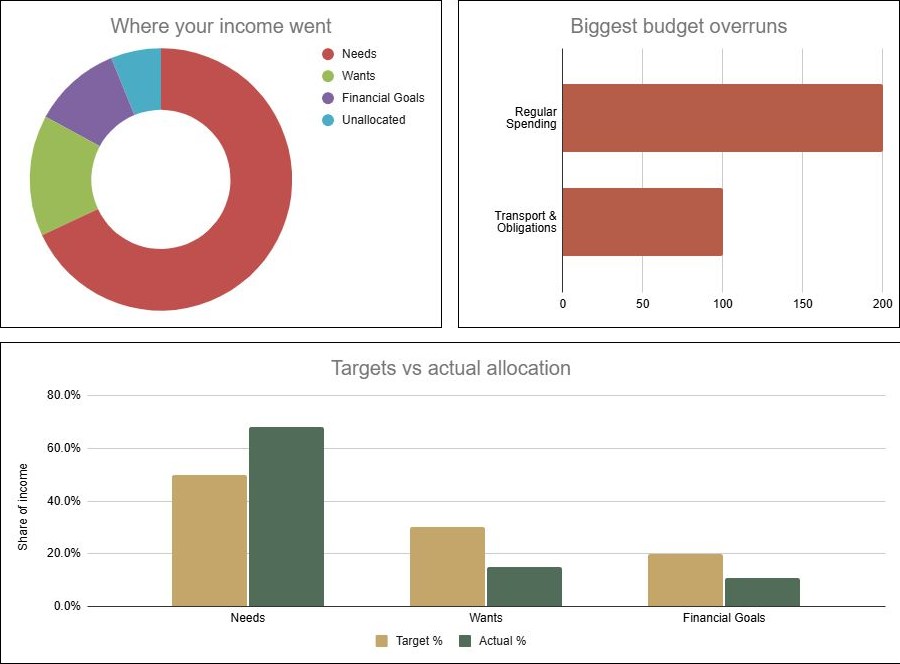
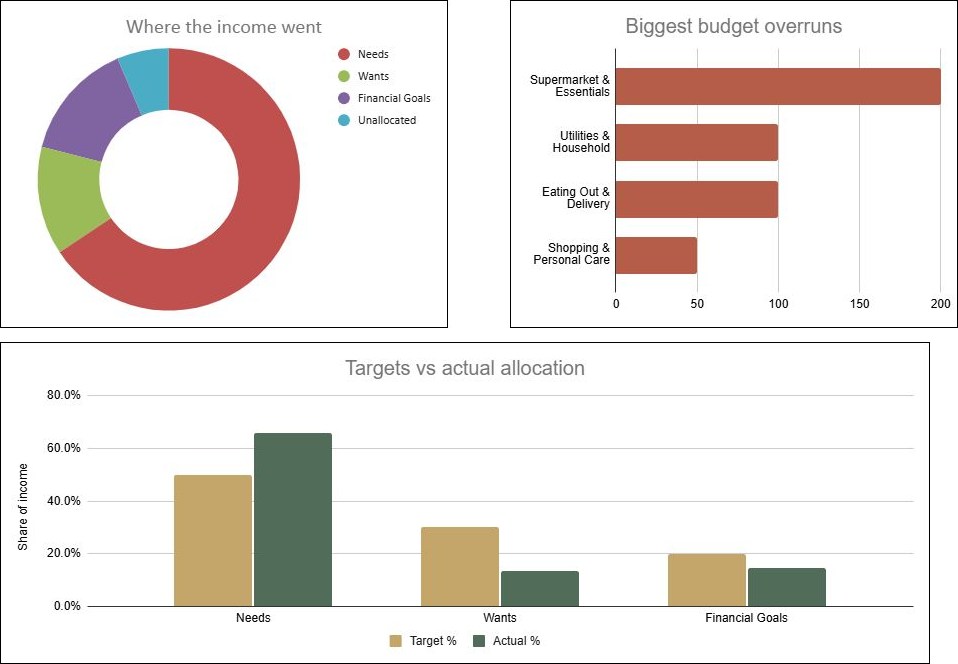
The charts use sample figures from the Egypt templates, including spending breakdown, budget overruns, and target vs. actual. U.S. versions use the same dashboard in USD.
One last thing
Budgeting isn’t about being perfect. Some months will go according to plan. Others won’t.
What matters is understanding your habits, making adjustments, and continuing to work toward your goals.
Start simple. Stay consistent. Make your money work for you.
For general financial education only. This guide is not personalized financial or investment advice. Read the full disclaimer.
Track what you own and owe with the free Net Worth Tracker.
Income and spending planning reference: CFPB · Your Money, Your Goals